A life built in oil, family, and public shadow
When I trace the life of John Warnock Hinckley Sr., I see a man shaped by industry, discipline, and the long gravity of family history. He was born on June 6, 1925, in Tryon, North Carolina, and later grew up in Tulsa, Oklahoma. Those places matter because they suggest the arc of his life: small beginnings, then movement into the hard, practical world of American energy. He died on January 29, 2008, in Williamsburg, Virginia, at the age of 82. By then, he had lived enough years to build a career, raise a family, and watch his name become attached to one of the most notorious public episodes in modern American history through his youngest son, John Hinckley Jr.
I think of him as a man whose life was both sturdy and fragile, like a bridge made of steel cables over deep water. On one side stood petroleum, engineering, and business success. On the other stood family strain, public scrutiny, and the kind of notoriety no parent chooses.
Early life, education, and military service
Hinckley Sr. came of age during a time when American men were often measured by duty first and ambition second. In 1943, he qualified for the Navy V-12 college program, a path that let talented young men prepare for officer service during World War II. He earned a Bachelor of Science in Mechanical Engineering from the University of Oklahoma in 1945, then was commissioned as a Navy lieutenant junior grade. He served about a year in the Pacific aboard a tanker and an attack transport.
Those details tell me a great deal about his character. Engineering required order, precision, and patience. Naval service demanded the same. He seems to have carried those habits into civilian life, where he would build companies and manage risk in a field that rewards nerve but punishes carelessness.
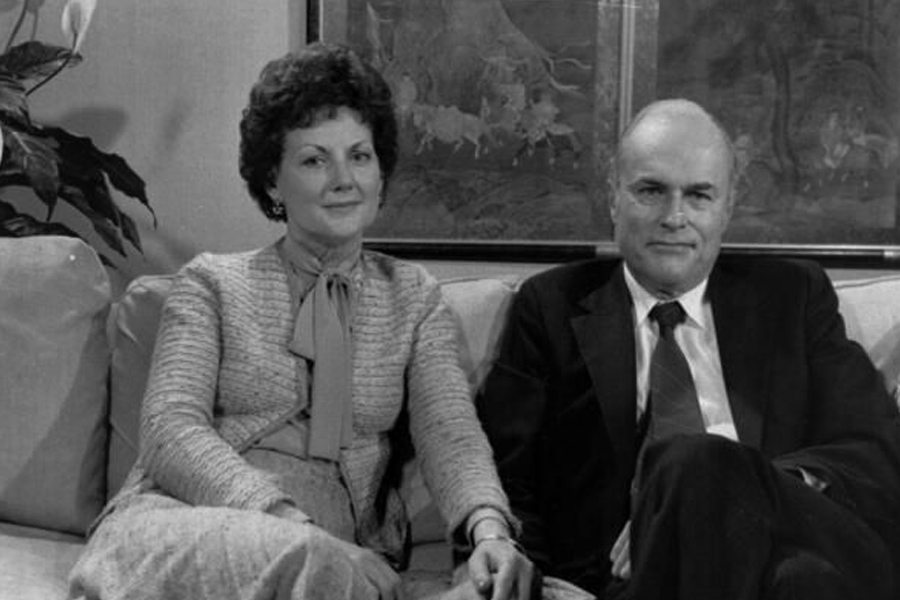
In 1946, he married Jo Ann Moore, his college sweetheart. That marriage anchored the next phase of his life. It lasted 61 years, which is not just a statistic. It is a weather system. It suggests endurance, compromise, shared memory, and all the quiet work that keeps a family standing when outside forces begin pressing in.
Career in oil and business achievement
He became an oilman after the war. He was a petroleum consultant after working for large oil company subsidiaries. He created Vanderbilt Resources Corp. in 1960 as a public drilling partnership general partner. Vanderbilt Energy Corp., a publicly traded oil and gas exploration business from south Texas to Canada, was his latter creation.
A career like that never stops. Oil is a frontier business requiring math, instinct, and timing. In that universe, Hinckley Sr. did more. His help structured it. He founded, ran, and built profitable companies. He retired from oil after Vanderbilt Energy was sold in 1983, according to his obituary.
His accomplishments were practical, not dramatic. He was not a flashy tycoon. Balance sheets, drilling partnerships, and expansion plans were his thing. I find that more telling than a shiny title. It depicts systemic life, not spectacle.
Jo Ann Moore Hinckley and the family home
Jo Ann Moore Hinckley was more than a spouse on a family chart. She was his lifelong partner, his college sweetheart, and the person closest to the family’s emotional center. In later years, she became especially visible because of the burden created by their youngest son’s actions. She was widely described as John Hinckley Jr.’s constant companion and primary caregiver in Williamsburg. That is a difficult role to imagine, because it combines love, duty, and public judgment in one exhausting package.
I see Jo Ann as the household’s emotional hinge. While John Sr. built companies and reputation, she held the family structure together through decades of pressure. Their marriage was long enough to include success, scandal, aging, and loss. She died in 2021, years after John Sr., closing another chapter in a story that the public kept reopening.
Scott Hinckley and Diane Hinckley
They had three children: Scott, Diane, and John Jr. Each belonged to the same family but had a different public image.
Son Scott Hinckley was older. He lived in Irving, Texas, with his wife Christa and their children, Spencer and Christa Keel Hinckley. Earlier reports said he was a Vanderbilt graduate and family oil business vice president. It makes sense in this household. One son carries on the business legacy professionally. The private life behind that function is less obvious yet important. As a spouse, father, and grandchild, his name was often linked to someone else’s crisis.
The oldest daughter was Diane Hinckley, subsequently Diane Sims. She and Stephen lived in Dallas with their children Christopher and Stephanie Sims. While her brothers’ family lives are more public, hers is documented as a daughter, wife, mother, and grandmother. That sketches a genuine person, not just a genealogy line. She represents the family tree’s gentler branch, which grows without headlines.
John Hinckley Jr. and the family shadow
John Hinckley Jr. is the name that most people recognize, and that fact inevitably affects how John Warnock Hinckley Sr. is remembered. But I think it is important not to reduce the father to the son’s notoriety. John Sr. was the parent of John Hinckley Jr., not his action.
Still, the family was forever altered by the 1981 shooting of President Ronald Reagan. The event pulled the Hinckleys into national attention and left a permanent mark on their private lives. John Sr. and Jo Ann spent years carrying the aftermath. The family’s daily life became entangled with public interest, legal scrutiny, and emotional strain. It is hard to imagine a cleaner example of how one violent act can cast a long, cold shadow over every member of a household.
Parents, stepfather, and earlier family roots
John Warnock Hinckley Sr. was Percy Porter and Katherine Arvilla’s son. The stepfather, J.H. “Kib” Brooks, and sister, Avilla Brooks Bates, died before him. These names identify him in a larger family lineage than a nuclear household.
His parents were Percy Porter Hinckley and Katherine Arvilla Warnock, and J.H. “Kib” Brooks was a subsequent father. Avilla Brooks Bates was part of the early sibling generation. Family history frequently has buried roots. It only becomes evident when one branch is above ground. His roots were real, varied, and linked to inherited identity and familial change.
Public memory, philanthropy, and the later years
After selling Vanderbilt Energy Corp. in 1983, Hinckley Sr. retired from oil and turned toward philanthropy and mental health advocacy. He founded the American Mental Health Fund to raise awareness of mental illness and reduce stigma. That choice feels significant to me. It suggests a man who had lived long enough with public pain to want to soften it for others.
He was also associated with charitable work aimed at helping sick and impoverished people. In that later chapter, he seems less like a businessman and more like a man trying to use resources for repair. The arc is striking: from drilling holes into the earth to trying to fill holes in the social fabric.
FAQ
Who was John Warnock Hinckley Sr.?
John Warnock Hinckley Sr. was an American oil executive, engineer, Navy veteran, husband, and father. He founded and led petroleum companies and later became involved in mental health philanthropy.
Who was his spouse?
His spouse was Jo Ann Moore Hinckley. They were college sweethearts and married for 61 years.
Who were his children?
He had three children: Scott Hinckley, Diane Hinckley, and John Hinckley Jr.
Who were his parents?
His parents were Percy Porter Hinckley and Katherine Arvilla Warnock Hinckley.
Did he have other close family members?
Yes. His stepfather was J.H. “Kib” Brooks, and his sister was Avilla Brooks Bates. His grandchildren named in the family record include Christa Keel Hinckley, Spencer Hinckley, Christopher Sims, and Stephanie Sims.
What was his career known for?
He was known for building oil and gas businesses, especially Vanderbilt Resources Corp. and Vanderbilt Energy Corp., and for later founding the American Mental Health Fund.
Why is his name still remembered?
His name remains tied to both business history and the public fallout from the actions of his son, John Hinckley Jr.